
Confused Website Visitors Most businesses worry about getting more visitors to their website.
They invest in SEO, advertising, social media, email campaigns, and content marketing to increase traffic. Every additional visitor feels like progress.
But there’s a hidden problem that many businesses overlook.
Not all lost visitors are equal.
A visitor who was never interested in your product is unlikely to become a customer anyway. Losing them isn’t a major concern.
The real cost comes from losing visitors who were genuinely interested but left confused.
These visitors arrived with intent. They were exploring a solution, considering their options. They may have even been close to making an enquiry.
Then something happened.
The messaging wasn’t clear. The value proposition was vague. The next step wasn’t obvious. The website created uncertainty instead of confidence.
And they left.
That visitor is often the most expensive one your business will ever lose.
Let’s explore why confusion is costing businesses more than they realise.
1. Confusion Kills Momentum
When a prospect lands on your website, they’re already investing attention.
They clicked a search result, opened an ad, followed a recommendation, or visited through a social media post. They have enough interest to learn more.
At that moment, momentum is working in your favour.
However, confusion interrupts momentum.
If visitors have to spend time figuring out what your business does, who it’s for, or how it helps them, the buying process slows down.
The more effort required to understand your offering, the greater the chance they’ll leave.
Buyers are busy. If clarity isn’t immediate, they’ll often move on to a competitor who explains things better.
Key Insight: Every moment of confusion creates an opportunity for a prospect to leave.
2. Visitors Make Decisions Faster Than You Think
Business owners often spend months refining their services.
Buyers spend seconds evaluating them.
Research consistently shows that website visitors form impressions extremely quickly. Within moments, they begin deciding whether your business appears trustworthy, relevant, and worth their time.
This doesn’t mean buyers are making final decisions immediately.
It means they’re deciding whether to continue paying attention.
If your website fails to communicate value quickly, visitors may never reach the sections that explain your expertise, process, or results.
First impressions aren’t the entire buying journey, but they determine whether the journey continues.
Key Insight: You don’t have long to earn a visitor’s attention.
3. Buyers Want Clarity More Than Creativity
Many businesses try to stand out through clever messaging.
Creative headlines, unique taglines, and industry-specific language can certainly help build brand identity.
The problem arises when creativity replaces clarity.
A visitor shouldn’t need to decode your messaging.
They should immediately understand:
- What you do
- Who you help
- What problem you solve
- Why they should care
Some of the highest-converting websites use surprisingly simple language.
That’s because clarity reduces friction.
People buy solutions they understand.
Key Insight: Clear beats clever when conversion is the goal.
4. Uncertainty Reduces Trust
Confusion doesn’t just affect understanding.
It also affects trust.
When buyers struggle to understand a business, they often start questioning its credibility.
If services are unclear, visitors may wonder whether the company understands its own value.
suppose pricing is vague, they may assume hidden costs. and processes aren’t explained, they may expect complications.
Trust grows when businesses make information easy to understand.
Transparency creates confidence.
The easier it is for buyers to understand your business, the safer they feel moving forward.
Key Insight: Clarity builds trust. Confusion creates hesitation.
5. The Cost of Confusion Compounds Over Time
A single confused visitor might not seem significant.
But confusion compounds.
If ten qualified prospects leave every week because your messaging is unclear, that’s more than 500 missed opportunities each year.
The cost becomes even greater when you consider how much effort went into attracting those visitors in the first place.
Advertising budgets.
SEO investments.
Content creation.
Social media campaigns.
All of that effort becomes less effective when visitors arrive and fail to understand your value.
Improving clarity often produces better results than simply increasing traffic.
Sometimes the fastest path to growth isn’t attracting more visitors. It’s helping existing visitors understand why they should stay.
Key Insight: The cost of confusion grows every day it’s left unaddressed.
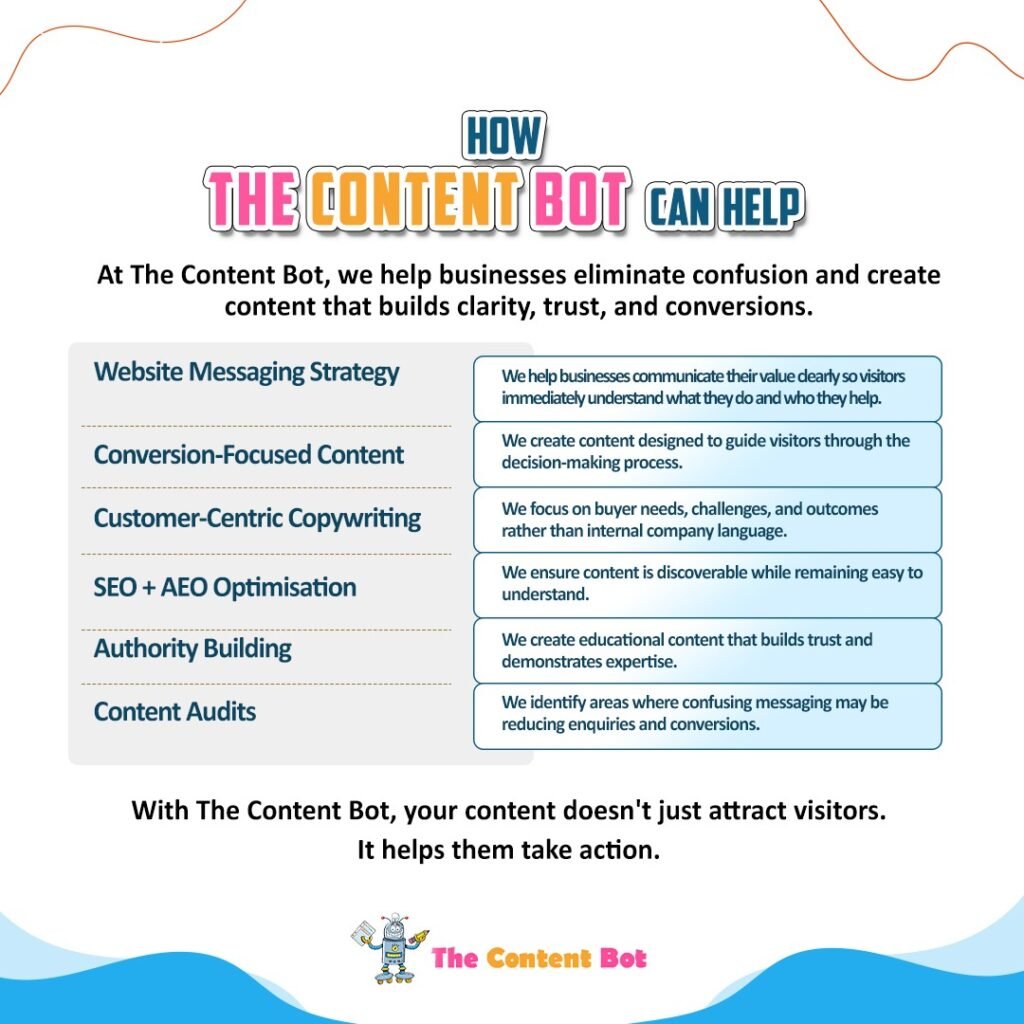
How The Content Bot Can Help
At The Content Bot, we help businesses eliminate confusion and create content that builds clarity, trust, and conversions.
Website Messaging Strategy
We help businesses communicate their value clearly so visitors immediately understand what they do and who they help.
Conversion-Focused Content
We create content designed to guide visitors through the decision-making process.
Customer-Centric Copywriting
We focus on buyer needs, challenges, and outcomes rather than internal company language.
SEO + AEO Optimisation
We ensure content is discoverable while remaining easy to understand.
Authority Building
We create educational content that builds trust and demonstrates expertise.
Content Audits
We identify areas where confusing messaging may be reducing enquiries and conversions.
With The Content Bot, your content doesn’t just attract visitors. It helps them take action.
Frequently Asked Questions
What causes visitors to leave a website? Common reasons include confusing messaging, poor navigation, lack of trust signals, slow loading speeds, and unclear calls-to-action.
How quickly do visitors form impressions? Often within seconds of landing on a page.
Is website design more important than messaging? Both matter, but clear messaging is often the bigger factor in conversion performance.
How can I identify confusing content? Look for high bounce rates, low engagement, low enquiry rates, and feedback from users who struggle to understand your offering.
Should every page focus on clarity? Absolutely. Every page should help visitors understand what action to take next.
Can improving clarity increase leads? In many cases, yes. Clearer messaging often improves conversions without requiring additional traffic.
Here’s How This Helps
SaaS Company Improves Trial Signups
A software company replaced technical jargon with customer-focused messaging. Trial registrations increased because visitors understood the product faster.
Consulting Firm Simplifies Its Website
A consulting business clarified its service offerings and improved navigation. Prospects spent more time on the website and submitted more enquiries.
Industrial Supplier Reduces Drop-Offs
An industrial supplier reorganised its content around buyer questions rather than product specifications. Engagement improved significantly.
Professional Services Company Increases Leads
A service-based company simplified its homepage messaging and added clearer calls-to-action, leading to more qualified enquiries.
The most expensive website visitor isn’t the one who never intended to buy.
It’s the one who arrived interested and left confused.
Every day, businesses lose potential customers not because their products are poor, but because their messaging creates uncertainty. Buyers don’t always need more information. They need clearer information.
As competition increases and attention spans shrink, clarity becomes one of the most valuable assets a business can have.
At The Content Bot, we help businesses create content that removes confusion, builds trust, and guides buyers toward action. Because when visitors understand your value, they’re far more likely to become customers.
