

Smart Buyers Delay Decisions One of the biggest mistakes businesses make is assuming that fast buyers are always the best buyers.
They’re not.
In fact, many smart buyers take longer to decide.
Not because they don’t need the service.
Not because they aren’t interested.
But because experienced buyers usually think more carefully before committing.
And honestly, that hesitation is often misunderstood in sales.
1. Smart Buyers Have Been Burned Before
Most experienced buyers have already made bad decisions in the past.
They’ve:
- hired the wrong agency,
- trusted fake promises,
- wasted money,
- or invested in things that didn’t deliver.
So now they move slower.
Not because they enjoy delaying.
But because they’re trying to avoid repeating the same mistake again.
Key Insight:
Past disappointments make buyers more cautious.
2. They’re Thinking Beyond The Excitement
During a sales call, everything can sound exciting.
But smart buyers usually pause afterward and think:
“What happens after this?”
They start looking deeper:
- Will this actually work long-term?
- Is the company reliable?
- Will communication stay consistent?
- Is this worth the investment?
They are thinking beyond the pitch.
Key Insight:
Experienced buyers think about long-term outcomes, not just short-term excitement.
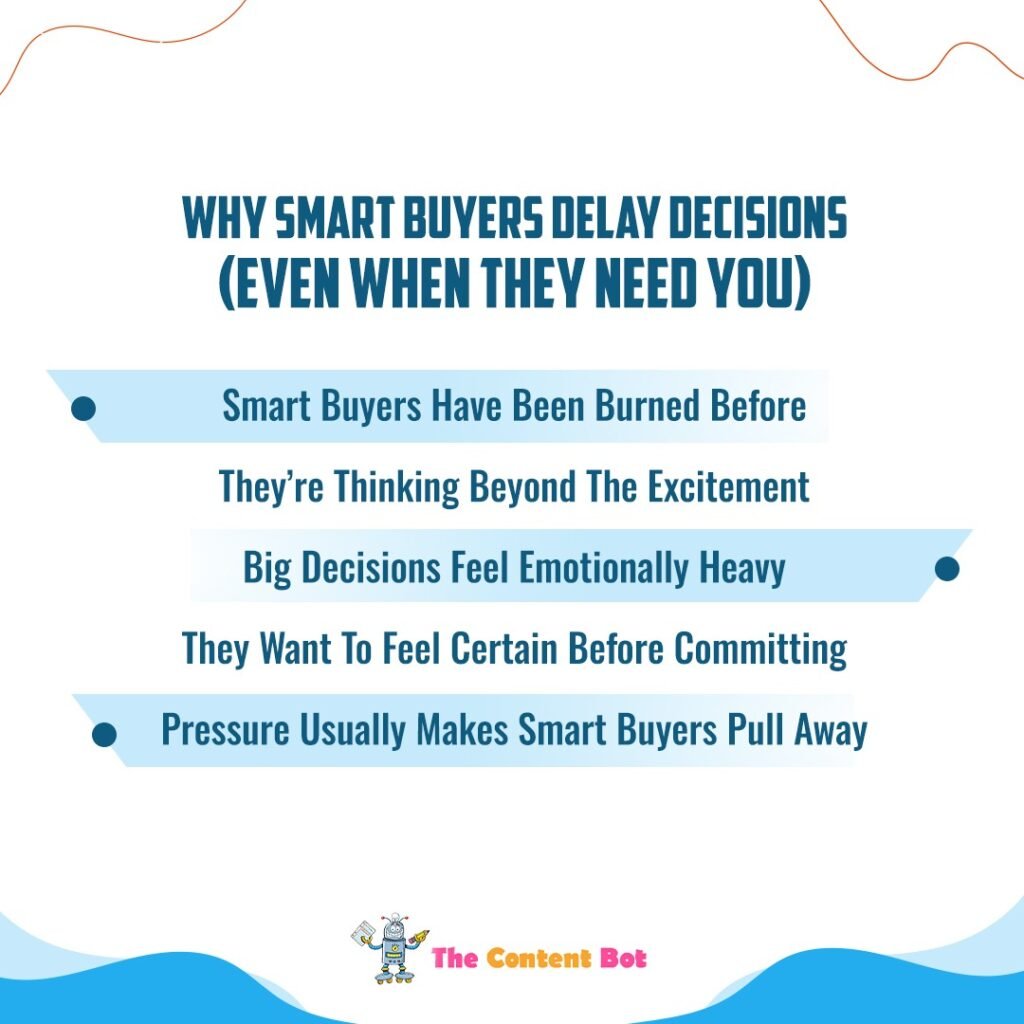
3. Big Decisions Feel Emotionally Heavy
High-ticket decisions carry pressure.
Especially for founders and business owners.
Because if the decision fails:
- money is lost,
- time is wasted,
- and trust gets damaged internally.
That emotional weight naturally slows people down.
Key Insight:
People move slower when the decision feels important.
4. They Want To Feel Certain Before Committing
A lot of buyers are not searching for the “perfect” option.
They are searching for enough certainty to move forward confidently.
That’s why they:
- ask more questions,
- compare options,
- check your online presence,
- and observe communication closely.
They’re trying to reduce emotional risk.
Key Insight:
Smart buyers don’t just buy solutions. They buy confidence.
5. Pressure Usually Makes Smart Buyers Pull Away
This is where many businesses lose good leads.
The moment the buyer hesitates, the company starts:
- pushing harder,
- forcing urgency,
- or aggressively following up.
Smart buyers notice this immediately.
And instead of moving faster, they emotionally step back.
Because pressure reduces trust.
Key Insight:
Confident businesses guide buyers. Desperate businesses chase them.
How The Content Bot Can Help
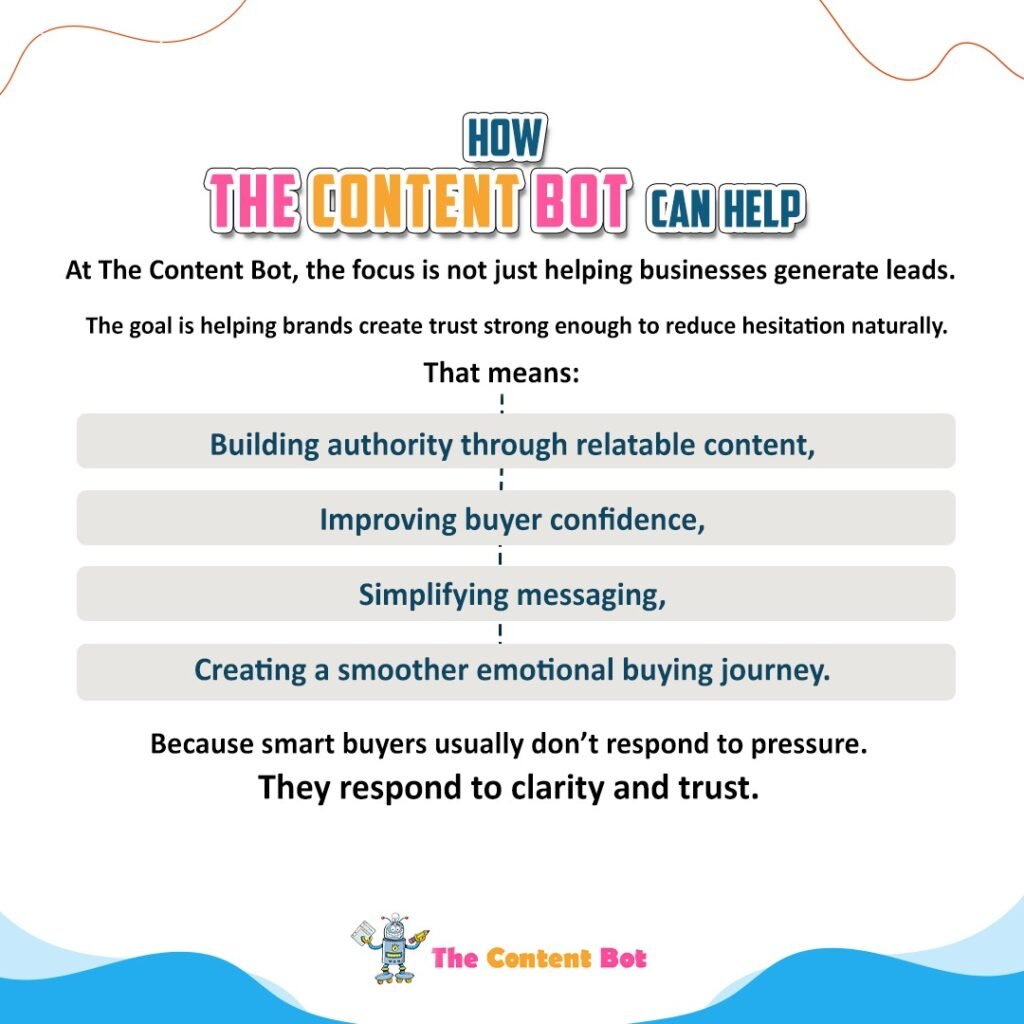
At The Content Bot, the focus is not just helping businesses generate leads.
The goal is helping brands create trust strong enough to reduce hesitation naturally.
That means:
- building authority through relatable content,
- improving buyer confidence,
- simplifying messaging,
- and creating a smoother emotional buying journey.
Because smart buyers usually don’t respond to pressure.
They respond to clarity and trust.
Here’s how it helps
The Buyer Who Had A Bad Past Experience
A founder loved the strategy call but delayed the decision because they previously worked with another company that failed badly.
Now they were being extra careful.
The Buyer Quietly Researching Everything
A prospect looked interested during meetings but spent days checking reviews, content, and online presence before making a final decision.
They weren’t avoiding the purchase.
They were reducing risk.
The Aggressive Follow-Up That Backfired
A company kept pushing urgency after the buyer asked for time.
The pressure made the buyer uncomfortable and the deal slowly disappeared.
Frequently Asked Questions
Why do smart buyers take longer to decide? Because experienced buyers naturally evaluate risk more carefully.
Does hesitation mean lack of interest? Not always. Serious buyers often think deeply before committing.
Why do buyers research companies so much? To reduce uncertainty and feel emotionally safer.
Can pressure hurt conversions? Yes. Aggressive selling often reduces trust.
What matters most in high-ticket sales? Trust, confidence, emotional clarity, and perceived safety.
Why do experienced buyers ask more questions? Because they are trying to avoid making poor decisions again.
How can businesses reduce buyer hesitation? By creating trust, simplifying decisions, and improving communication clarity.
Smart buyers delay decisions for a reason. Not because they don’t need help. But because they understand the cost of making the wrong choice. That’s why the best businesses don’t rely on pressure to close deals.
They focus on:
- building trust,
- reducing uncertainty,
- and helping buyers feel confident enough to move forward naturally.
Because real confidence converts better than aggressive selling ever will.
