
Psychology behind let me get back to you Every salesperson has heard this line before.
“Looks good.”
“Sounds interesting.”
“Let me get back to you.”
And the moment the call ends, you already know what’s coming next.
Silence.
No reply, update, decision.
Honestly, this is one of the most frustrating parts of sales because everything felt positive until that moment.
The buyer understood your offer.
They agreed with the problem.
They even sounded excited.
So what changed?
Most businesses think they need:
- better follow-ups,
- more pressure,
- or stronger closing techniques.
But usually, the real issue is much more human than that.
The buyer simply does not feel emotionally ready yet.
1. People Need Time To Feel Safe About Big Decisions
Most high-ticket decisions feel heavy emotionally.
Even if your offer makes complete sense, the buyer’s brain immediately starts thinking:
“What if this goes wrong?”
That thought alone slows people down.
Especially if they’ve:
- wasted money before,
- trusted the wrong people,
- or been disappointed in the past.
Now they are not just buying a service.
They are trying to avoid another bad experience.
Key Insight:
People move slowly when the decision feels emotionally risky.
2. Sometimes The Buyer Is Just Mentally Tired
A lot of business owners are exhausted.
Not lazy.
Not uninterested.
Just mentally overloaded.
They’re already dealing with:
- clients,
- staff,
- finances,
- operations,
- and stress every single day.
So when another important decision appears, the brain naturally says:
“Later.”
Not because they hate the offer.
Because they don’t have the emotional energy right now.
Key Insight:
Mental exhaustion creates hesitation even when interest exists.
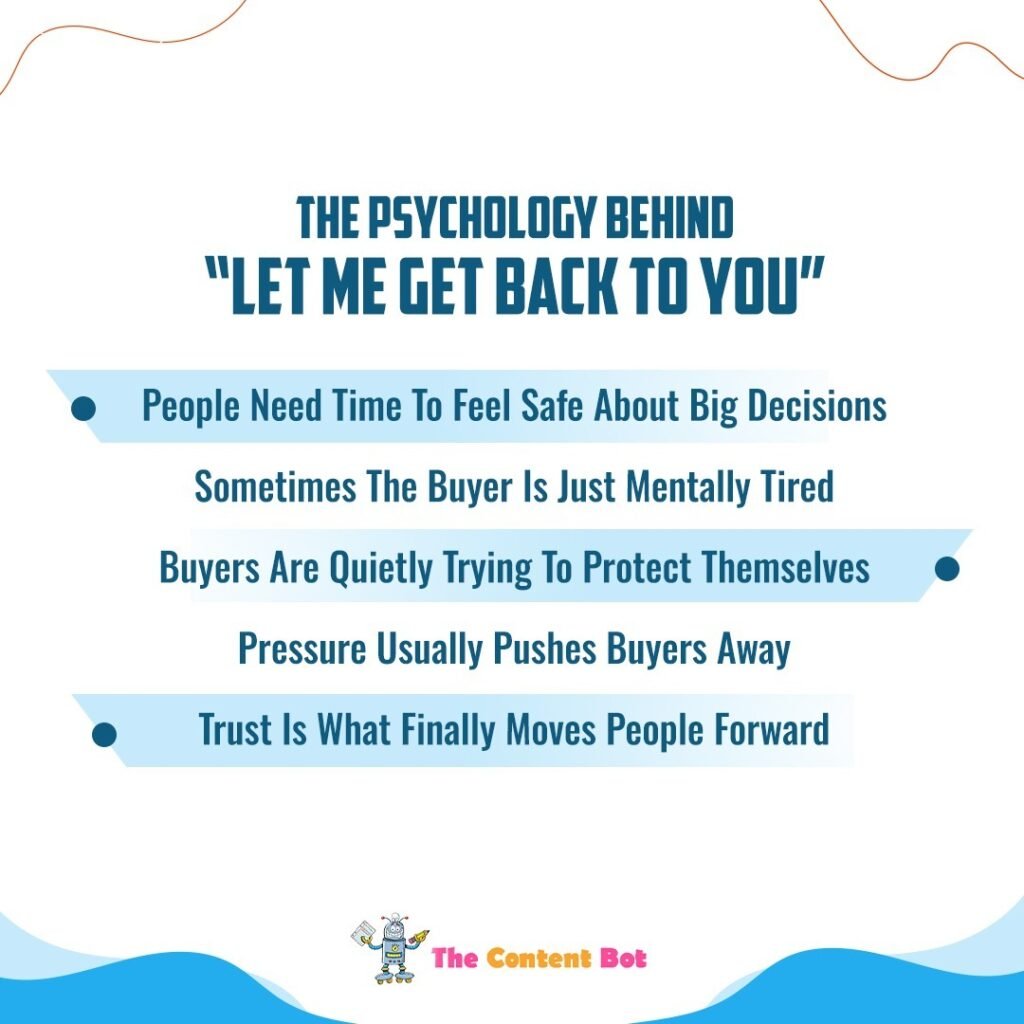
3. Buyers Are Quietly Trying To Protect Themselves
This part is important.
Most buyers don’t openly say:
“I’m scared this won’t work.”
But internally, that fear exists.
Nobody wants to feel:
- fooled,
- regretful,
- embarrassed,
- or financially burned again.
Especially in business.
So when someone says:
“Let me get back to you,”
many times they are really saying:
“I need more time to feel confident about this.”
Key Insight:
Hesitation is often self-protection, not rejection.
4. Pressure Usually Pushes Buyers Away
A lot of businesses panic after hearing hesitation.
So they instantly start:
- chasing the buyer,
- sending repeated messages,
- forcing urgency,
- or trying aggressive closing tactics.
That usually makes things worse.
Because pressure creates emotional resistance.
Nobody likes feeling cornered into a decision.
Key Insight:
People buy faster when they feel calm not pressured.
5. Trust Is What Finally Moves People Forward
At the end of the day, buyers move when they feel:
- safe,
- understood,
- and emotionally comfortable.
That trust is built through small things:
- honest communication,
- clarity,
- patience,
- consistency,
- and natural conversations.
Not through manipulation.
Key Insight:
The strongest sales conversations usually feel human, not scripted.
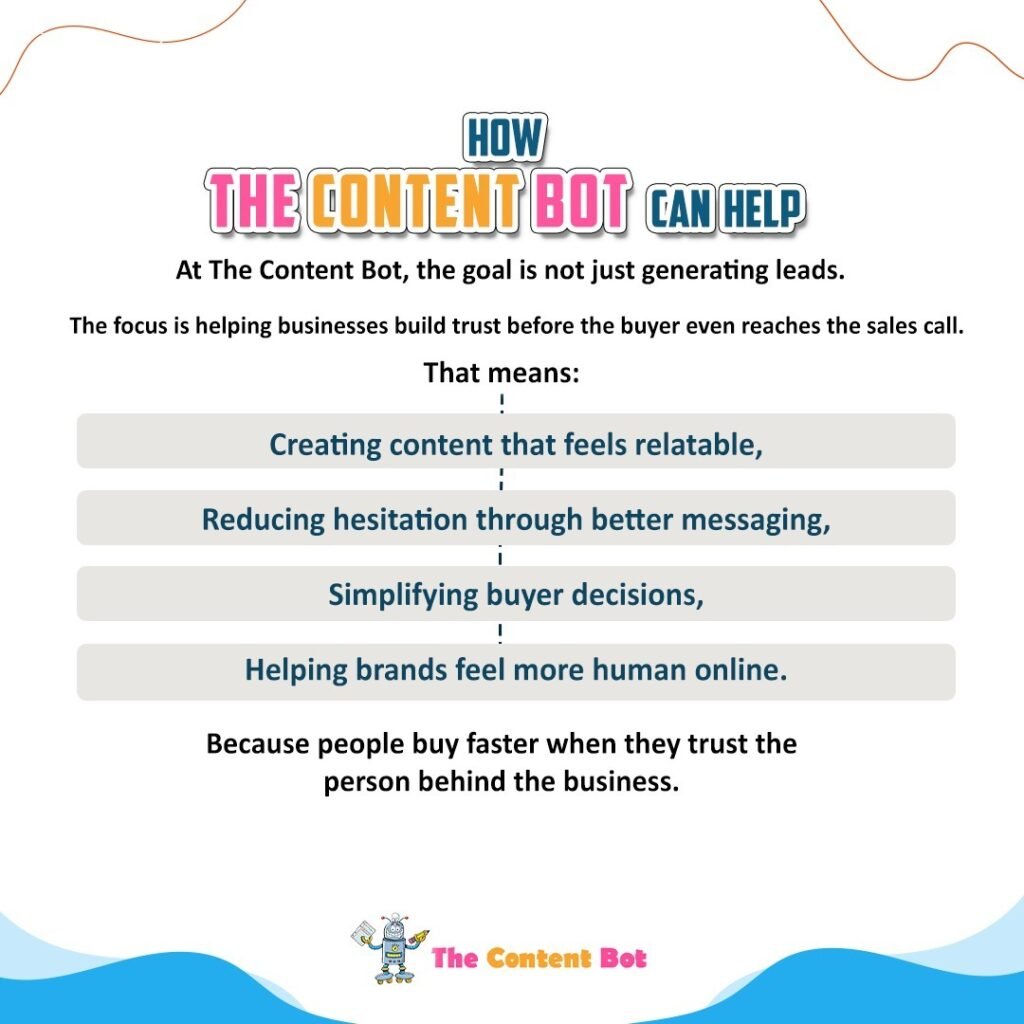
How The Content Bot Can Help
At The Content Bot, the goal is not just generating leads.
The focus is helping businesses build trust before the buyer even reaches the sales call.
That means:
- creating content that feels relatable,
- reducing hesitation through better messaging,
- simplifying buyer decisions,
- and helping brands feel more human online.
Because people buy faster when they trust the person behind the business.
Here’s How it Helps
Scenario 1: The Buyer Who Had Been Burned Before
A founder loved the strategy call but had previously hired another agency that completely failed them.
Now even a good solution felt emotionally risky.
Scenario 2: The Exhausted Business Owner
A prospect genuinely wanted help but kept delaying the decision because they were already overwhelmed with daily business stress.
Scenario 3: The Aggressive Follow-Up That Killed The Deal
After hearing “Let me get back to you,” a company kept pushing the buyer every day.
Instead of creating urgency, it made the buyer emotionally pull away.
Frequently Asked Questions
Does “Let me get back to you” always mean no? No. Many buyers genuinely need time to feel emotionally ready.
Why do buyers hesitate even after positive calls? Usually because fear, uncertainty, or mental overload still exists internally.
Can aggressive follow-ups hurt sales? Yes. Too much pressure often creates resistance.
Why do buyers delay expensive decisions? Because high-ticket decisions naturally feel emotionally heavy.
What matters most during sales? Trust, emotional clarity, and confidence.
Do people buy emotionally? Yes. Logic matters, but emotion usually drives action first.
How can businesses reduce hesitation? By creating trust, clarity, and a calmer buying experience.
When buyers say:
“Let me get back to you,”
it usually doesn’t mean they didn’t understand your offer.
Most of the time, they understood it perfectly.
They’re just trying to feel emotionally comfortable enough to move forward.
And honestly, that’s the part most businesses forget.
Because sales is not only about convincing people.
It’s about making people feel safe enough to say yes.
