
Silent deal killer They understand your offer. They agree with your solution.
But somehow the deal still doesn’t move forward.
This happens more often than most businesses admit.
You explain your service clearly.
The prospect seems interested.
They nod through the entire call.
Sometimes they even say:
“This sounds exactly like what we need.”
And then comes the classic line:
“Let me think about it.”
After that?
Silence.
Most founders think the problem is pricing, competition, or follow-up.
But many times, the real issue is much simpler.
The buyer understood the offer logically… but never emotionally felt the need to act now.
And that small gap quietly kills a lot of deals.
1. Understanding Does Not Create Urgency
A buyer can fully understand your service and still delay the decision.
Why?
Because people don’t move just because something makes sense. They move when staying where they are starts feeling uncomfortable.
A lot of businesses explain the solution well but never make the buyer truly feel the cost of waiting.
Key Insight:
People buy faster when inaction feels expensive.
2. Too Much Information Creates Hesitation
Many founders think giving more details builds trust.
Sometimes it actually slows the deal down.
When buyers receive too many explanations, PDFs, options, or strategies, they stop making decisions emotionally and start overthinking everything.
Now they compare.
Research.
Delay.
And disappear.
Key Insight:
Clear decisions convert faster than complicated ones.
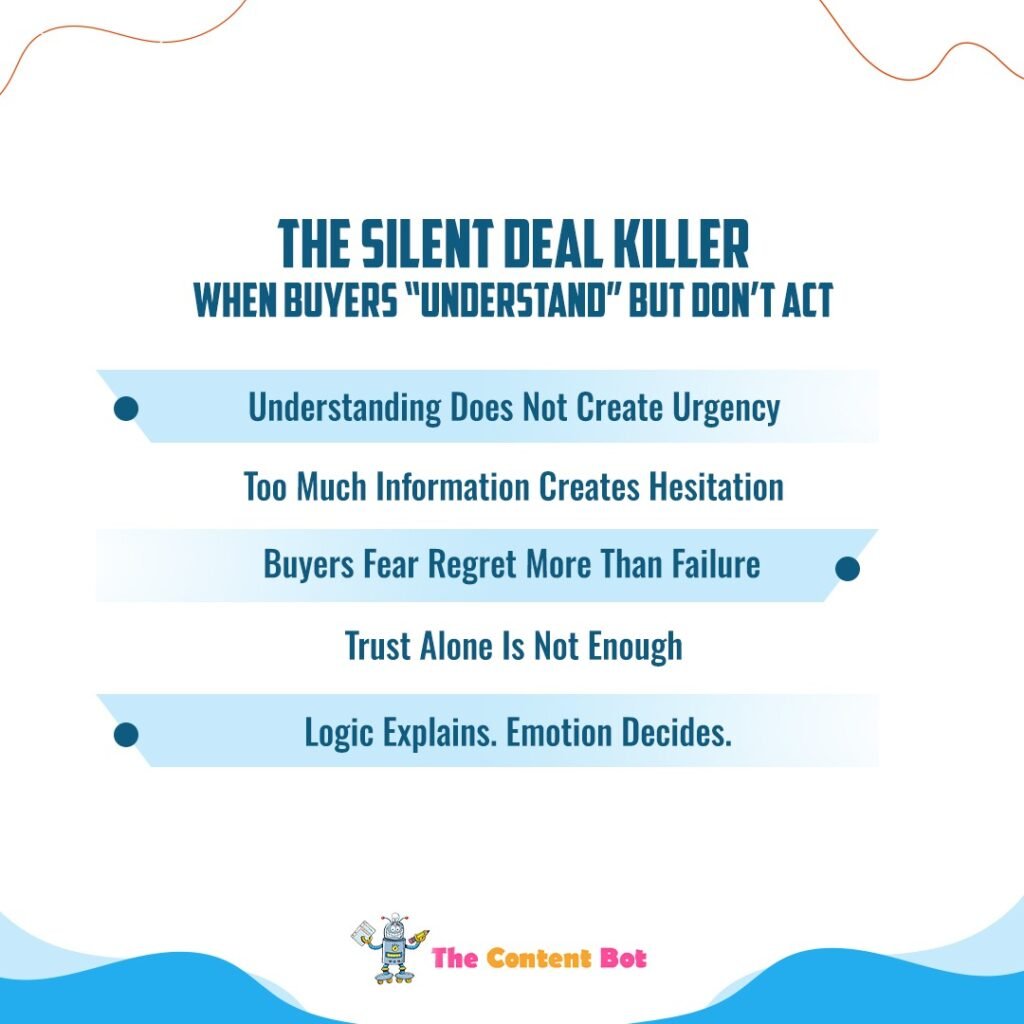
3. Buyers Fear Regret More Than Failure
Most prospects are not secretly thinking:
“What if this changes everything?”
They are thinking:
“What if this turns out to be another mistake?”
Past bad experiences create hesitation.
Even if your solution is good, buyers may still fear wasting money, time, or trust again.
Key Insight:
Fear delays more deals than lack of interest.
4. Trust Alone Is Not Enough
A lot of brands focus only on:
- posting content,
- building authority,
- and gaining visibility.
That helps people trust you.
But trust alone does not create action.
Your content should not just educate people. It should guide them toward a clear decision.
Key Insight:
Trust gets attention. Clarity creates conversions.
5. Logic Explains. Emotion Decides.
Many sales conversations sound smart but still fail to convert.
Why?
Because the buyer understood the offer logically but never emotionally felt urgency, excitement, or confidence.
People use logic to justify decisions.
But emotion is usually what triggers action.
Key Insight:
If buyers only “understand,” they may still never move.
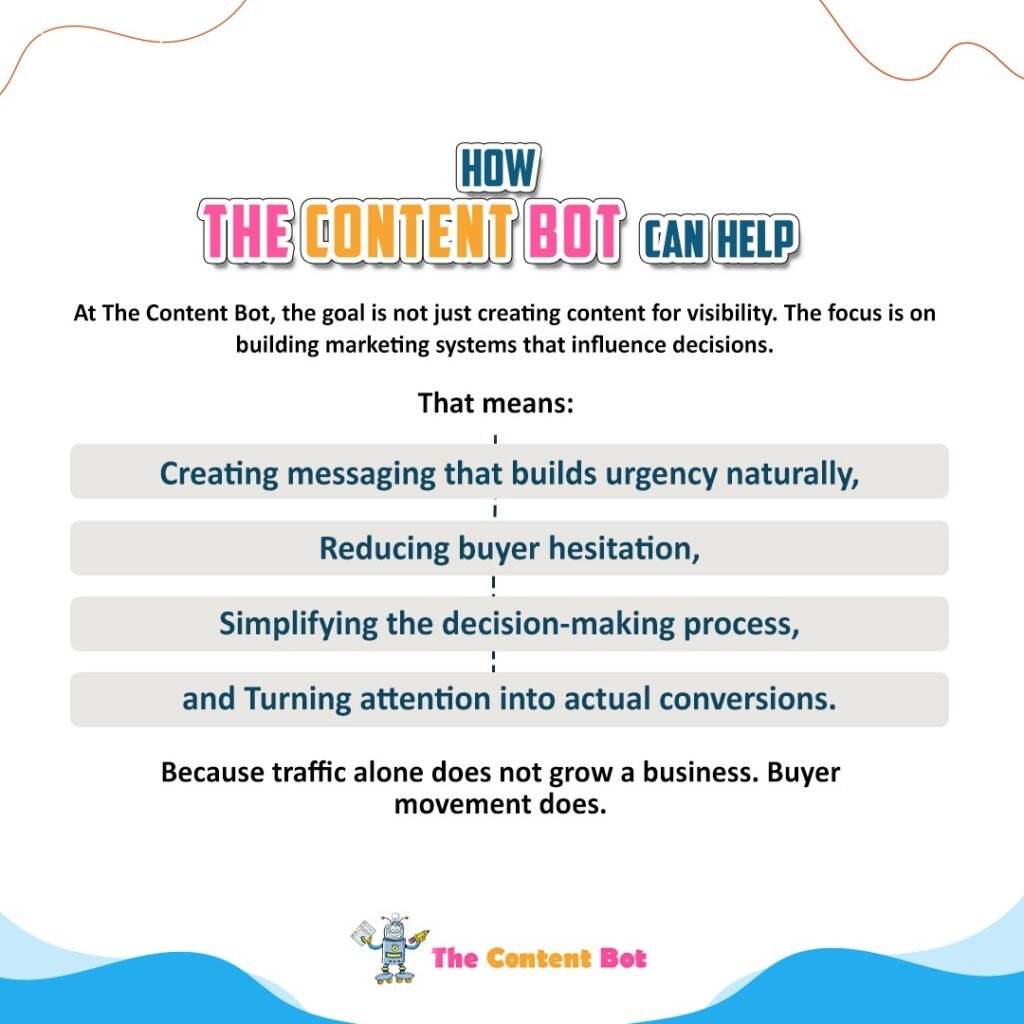
How The Content Bot Can Help
At The Content Bot, the goal is not just creating content for visibility.
The focus is on building marketing systems that influence decisions.
That means:
- creating messaging that builds urgency naturally,
- reducing buyer hesitation,
- simplifying the decision-making process,
- and turning attention into actual conversions.
Because traffic alone does not grow a business.
Buyer movement does.
Here’s how it helps
Scenario 1: The “Perfect Call” That Went Nowhere
A prospect spends an hour on a call, agrees with every point, and says they love the strategy.
But after the meeting, they stop replying.
The issue was not the offer.
The urgency simply wasn’t strong enough.
Scenario 2: Too Much Information
An agency sends a huge proposal with multiple packages and technical explanations.
The client becomes overwhelmed and delays the decision for weeks.
Instead of creating clarity, the proposal created confusion.
Scenario 3: Fear From Past Experiences
A business owner knows they need help with marketing.
But they previously hired someone who failed badly.
Now even a good solution feels risky.
The hesitation comes from fear, not lack of understanding.
Frequently Asked Questions
Why do buyers delay even after showing interest? Because interest does not always create urgency.
Is this always a pricing issue? No. Many times the real issue is hesitation or fear.
Can content improve conversions? Yes if the content is designed to influence decisions emotionally.
Why do prospects say “I’ll think about it”? Because delaying feels safer than committing.
What is the biggest sales mistake businesses make? Over-explaining instead of simplifying decisions.
Does authority automatically increase sales? Not always. Authority builds trust, but trust alone doesn’t create momentum.
How can businesses reduce hesitation? By making decisions feel simpler, safer, and clearer.
One of the biggest mistakes in sales is believing that understanding automatically leads to action. It doesn’t. A buyer can completely understand your value and still delay the decision. Because people don’t buy based on logic alone. They buy when the decision feels emotionally clear, safe, and important enough to act on now.
