
Website Conversion- When businesses think about lead generation problems, they usually focus on traffic.
They assume the solution is more SEO, more ads, more social media content, or larger marketing budgets. While traffic certainly matters, it often isn’t the real issue.
The reality is that many businesses already attract the right visitors. The problem is what happens after those visitors arrive.
A potential customer lands on the website, spends a few seconds looking around, gets confused, doesn’t find what they’re looking for, and leaves. No enquiry, call, form submission.
The business never even knows that opportunity existed.
This is one of the most expensive problems a business can have because the cost isn’t visible. Every day, qualified prospects may be visiting your website and leaving without taking action.
Let’s look at the common reasons why websites lose qualified leads and what businesses can do to fix them.
1. Visitors Don’t Understand What You Do
One of the biggest mistakes businesses make is assuming visitors already understand their offerings.
The moment someone lands on your website, they are asking a simple question:
“What exactly does this company do?”
If the answer isn’t obvious within a few seconds, visitors often leave.
Many websites focus heavily on creative taglines, industry jargon, or vague messaging. While these may sound impressive internally, they often create confusion for first-time visitors.
Clarity beats creativity when it comes to conversions.
Visitors should immediately understand who you help, what problem you solve, and why they should care.
Key Insight: Confused visitors rarely become customers.
2. The Website Talks About the Business, Not the Buyer
Many websites are written from the company’s perspective.
They focus on company history, achievements, capabilities, and internal milestones. While these things matter, they aren’t usually the first thing buyers care about.
Most visitors are focused on their own challenges.
They want to know:
- Can you solve my problem?
- Have you helped businesses like mine?
- What results can I expect?
- Why should I trust you?
When a website focuses entirely on itself, it misses the opportunity to connect with the buyer’s needs.
The most effective websites make the customer the hero of the story.
Key Insight: Buyers care more about their problems than your company profile.
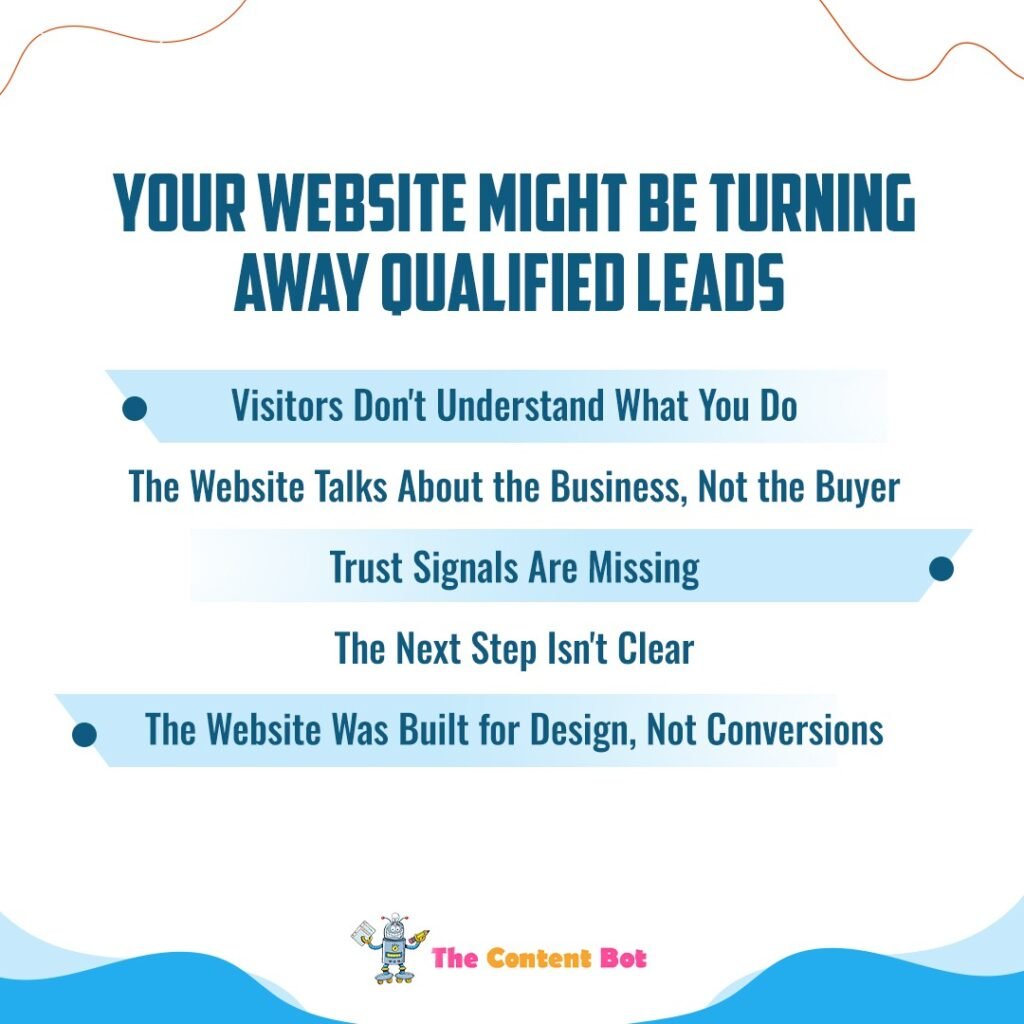
3. Trust Signals Are Missing
Before contacting a business, most buyers look for reassurance.
They want evidence that the company is credible, experienced, and capable of delivering results.
Unfortunately, many websites provide very little proof.
Missing trust signals often include:
- Client testimonials
- Case studies
- Industry certifications
- Awards
- Reviews
- Portfolio examples
- Team expertise
Without these signals, visitors may hesitate to take the next step.
Even if your service is excellent, prospects need confidence before engaging.
Trust is built through evidence, not claims.
Key Insight: Trust is easier to demonstrate than to explain.
4. The Next Step Isn’t Clear
Many websites unintentionally create friction.
A visitor becomes interested, but they don’t know what to do next.
Should they call?, fill out a form?, schedule a meeting?, send an email?
When the next step is unclear, people often postpone taking action. In many cases, they never return.
Every page should guide visitors toward a clear action.
Whether it’s booking a consultation, requesting a quote, or downloading a resource, visitors should always know what comes next.
Key Insight: If visitors don’t know what to do next, they’ll usually do nothing.
5. The Website Was Built for Design, Not Conversions
A beautiful website is valuable.
But aesthetics alone don’t generate leads.
Many businesses invest heavily in design while overlooking usability, messaging, and conversion strategy.
A visually impressive website can still underperform if visitors struggle to navigate it or find relevant information.
The best-performing websites balance design with functionality.
They help visitors quickly understand the offering, build trust, and take action.
Good design attracts attention. Good strategy converts attention into opportunities.
Key Insight: A beautiful website that doesn’t convert is an expensive brochure.
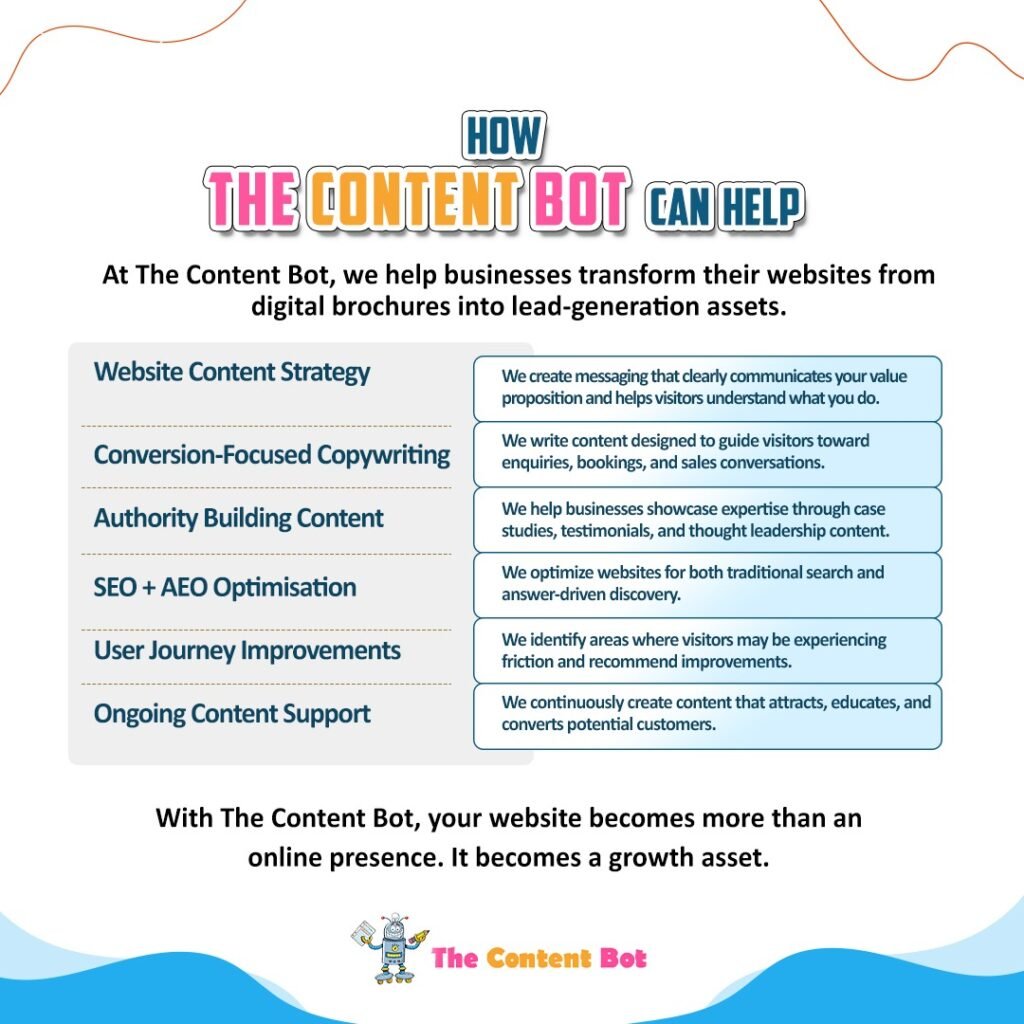
How The Content Bot Can Help
At The Content Bot, we help businesses transform their websites from digital brochures into lead-generation assets.
Website Content Strategy
We create messaging that clearly communicates your value proposition and helps visitors understand what you do.
Conversion-Focused Copywriting
We write content designed to guide visitors toward enquiries, bookings, and sales conversations.
Authority Building Content
We help businesses showcase expertise through case studies, testimonials, and thought leadership content.
SEO + AEO Optimisation
We optimise websites for both traditional search and answer-driven discovery.
User Journey Improvements
We identify areas where visitors may be experiencing friction and recommend improvements.
Ongoing Content Support
We continuously create content that attracts, educates, and converts potential customers.
With The Content Bot, your website becomes more than an online presence. It becomes a growth asset.
Frequently Asked Questions
How do I know if my website is losing leads? High bounce rates, low enquiry rates, and low engagement often indicate that visitors are leaving without taking action.
Can a website look good and still perform poorly? Absolutely. Great design doesn’t automatically create conversions.
What is the most important element of a website? Clarity. Visitors should immediately understand what you do and how you can help them.
How important are testimonials? Very important. Social proof significantly increases buyer confidence.
Should every page have a call-to-action? Yes. Visitors should always know what step to take next.
Can content alone improve conversions? Content plays a major role, especially when combined with good design, navigation, and user experience.
Here’s How This Helps
SaaS Company Improves Demo Requests
A software company simplified its homepage messaging and added stronger calls-to-action. Demo enquiries increased because visitors immediately understood the product’s value.
Consulting Firm Builds Trust
A consulting business added case studies and client testimonials throughout its website. Prospects felt more confident reaching out.
Industrial Supplier Increases Enquiries
An industrial supplier reorganised its service pages to focus on customer challenges rather than technical features. This improved engagement and lead quality.
Professional Services Company Reduces Bounce Rates
A service-based business improved navigation and clarified its messaging, helping visitors find relevant information faster and stay longer.
Conclusion
Many businesses assume they have a traffic problem when they actually have a conversion problem.
The truth is that qualified leads may already be visiting your website every day. The question is whether your website gives them enough clarity, confidence, and direction to take the next step.
As buyer behaviour becomes increasingly digital, websites play a larger role in shaping first impressions and influencing decisions. Businesses that optimise their websites for trust, usability, and conversions will gain a significant advantage.
At The Content Bot, we help businesses create websites and content strategies that not only attract visitors but also turn them into opportunities. Because generating traffic is only half the battle. Converting it is where growth happens.
