
High-performing blog in 2025 . In 2025, blogging isn’t about writing it’s about architecting experiences.
Readers don’t skim text anymore; they scan structure, speed, and value.
Search engines, too, don’t just index keywords they evaluate engagement, clarity, and topical authority.
A high-performing blog today is a system, not a post one built on design psychology, AI-driven insights, and content structure that keeps both readers and algorithms hooked.
Let’s break down the anatomy of a blog that dominates in 2025 and how you can build one that ranks, resonates, and converts.
1. Headline Hierarchy: The Click Magnet’s First Impression
Your headline decides if your blog gets read or ignored.
In 2025, strong headlines blend curiosity, clarity, and click-worthiness. They should promise transformation or exclusive insight not just describe the topic.
Use emotion + precision: “The Psychology of AI-Generated Content” beats “AI and Content Creation.”
Key Insights:
- The best headlines combine data-backed specificity and emotional appeal.
- Use formats like “X That Do Y” or “Why Most [Industry] Fail at [Goal].”
- Every headline should pass the “stop-scroll” test would you click it?
2. Story-Layered Introduction: Hook, Context, Value
Intros must answer why this article matters right now.
Readers don’t want definitions they want direction. The first 3 sentences should:
- Hook with relatability or shock.
- Frame the pain point.
- Promise a solution or framework.
Example: “Most blogs drown in information few deliver transformation.”
Key Insights:
- Intros should create emotional tension that only your content resolves.
- Context builds trust; clarity builds retention.
- The hook’s job is to make readers commit to paragraph two.
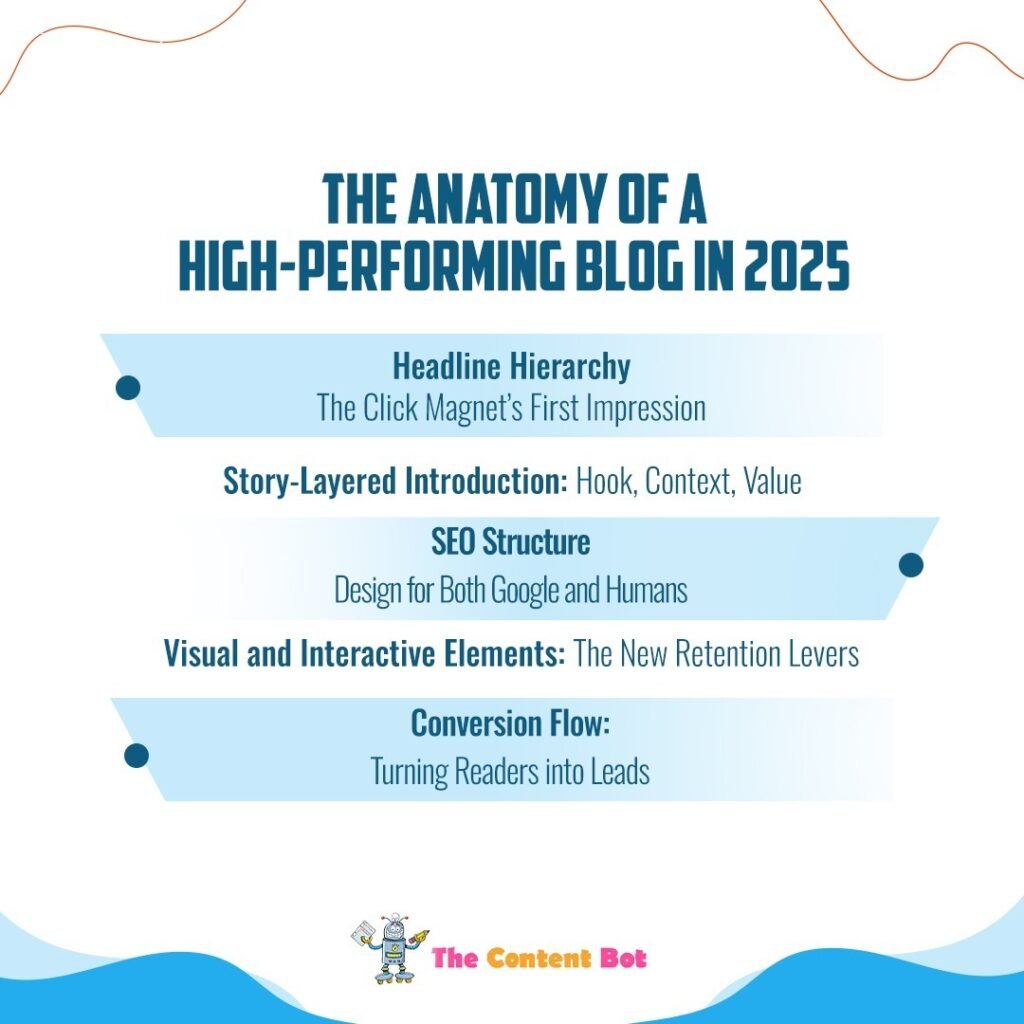
3. SEO Structure: Design for Both Google and Humans
Modern SEO is semantic it measures topic authority, not keyword repetition.
That means your blog must structure information for logic and readability:
- H2s for main arguments.
- H3s for support and sub-points.
- Bullet lists for scannability.
- Internal links for retention.
Use keyword clusters naturally, focusing on meaning rather than density.
Key Insights:
- Search engines reward structured clarity and topic depth.
- Use schema markup and FAQs to claim Featured Snippets.
- Readability is SEO’s new superpower.
4. Visual and Interactive Elements: The New Retention Levers
In 2025, visuals are non-negotiable.
Blogs that use videos, carousels, infographics, or inline calculators outperform static text by over 60%.
Interactive media doesn’t just improve time-on-page it increases trust and shareability.
Readers don’t just want to read they want to experience your idea.
Key Insights:
- Use visuals every 300–400 words to reset reader focus.
- Embed examples, short clips, or even AI-generated graphics for authority.
- Interactive tools like checklists or templates turn visitors into subscribers.
5. Conversion Flow: Turning Readers into Leads
A blog without a conversion layer is a lost opportunity.
Add micro-CTAs contextual prompts offering downloads, checklists, or audits — inside the content, not just at the end.
Every high-performing blog balances education and invitation.
Your reader should finish knowing what to do next not just what they learned.
Key Insights:
- Place CTAs where attention peaks (after problem-solving sections).
- Use proof-driven copy (“Join 7,000 marketers already using this system”).
- Conversion begins when your content feels actionable, not salesy.
How The Content Bot Will Help
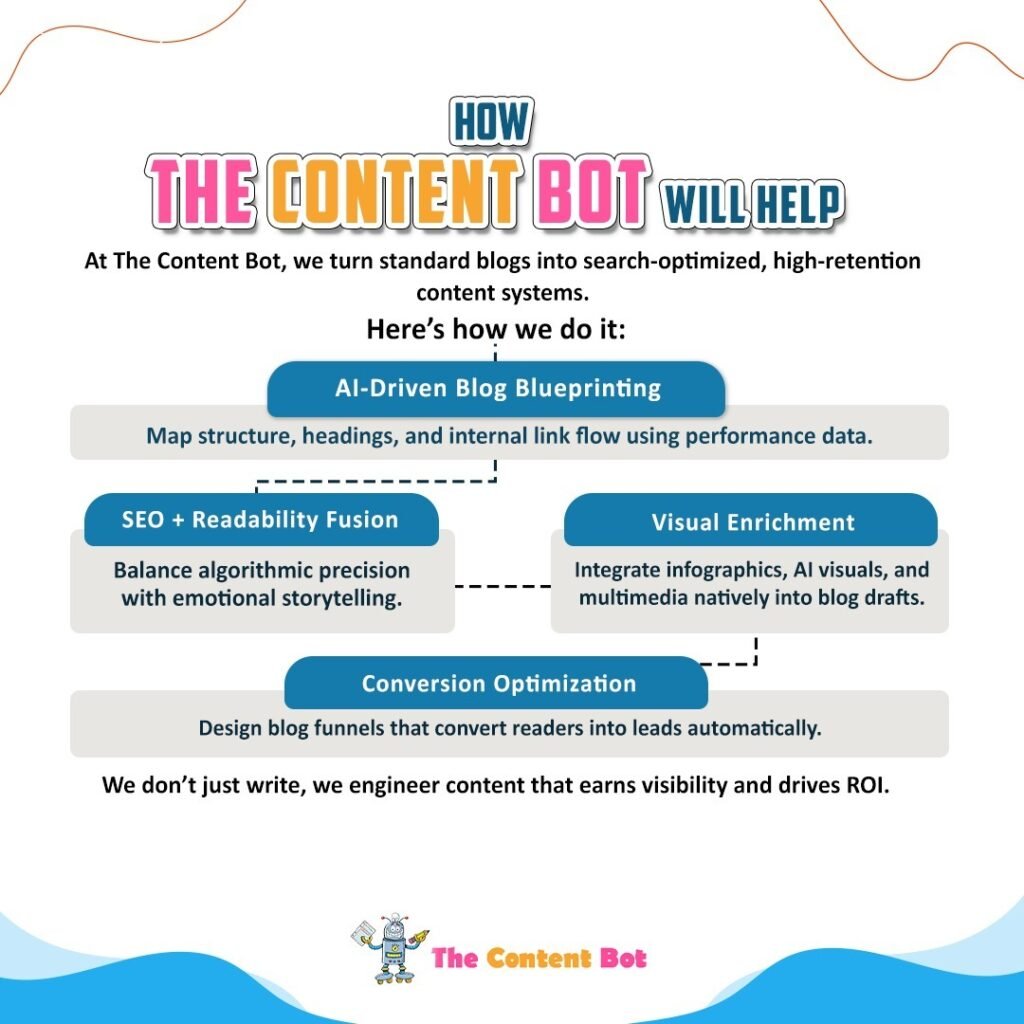
At The Content Bot, we turn standard blogs into search-optimized, high-retention content systems.
Here’s how we do it:
- AI-Driven Blog Blueprinting: Map structure, headings, and internal link flow using performance data.
- SEO + Readability Fusion: Balance algorithmic precision with emotional storytelling.
- Visual Enrichment: Integrate infographics, AI visuals, and multimedia natively into blog drafts.
- Conversion Optimization: Design blog funnels that convert readers into leads automatically.
We don’t just write we engineer content that earns visibility and drives ROI.
Frequently Asked Questions
How long should a high-performing blog be in 2025? Between 1,500–2,500 words deep enough for authority, short enough for readability.
Do blogs still rank in the AI era? Yes. In fact, AI increases demand for human-context content structured, trustworthy, and useful posts.
How often should I update old blogs? Quarterly freshness boosts ranking signals and revalidates expertise.
What’s the biggest mistake in blogging today? Publishing without a funnel traffic that doesn’t convert is wasted energy.
Here’s How This Helps
SaaS Brand: Switched to blog frameworks built by The Content Bot → average session time +61%, demo bookings up 34%.
Digital Agency: Rebuilt blog templates using CTA flow mapping → lead conversion +2.5× in 45 days.
E-Commerce Platform: Added AI visuals + schema-rich FAQs → organic traffic +78%, bounce rate −26%.
The blogs that win in 2025 don’t just inform they influence behavior.
A high-performing blog blends data, design, and psychology into a seamless narrative that ranks, resonates, and converts.
At The Content Bot, we build exactly that.
Because in today’s digital landscape, words aren’t enough structure sells.
Great blogs don’t shout for clicks.
They earn loyalty one scroll at a time.
